If you are looking at Honesdale homes for sale, you are not just comparing square footage and price tags. You are choosing a pace of life, a town setting, and a property type that can feel very
Dated: June 9 2026
Views: 3
The school pickup line is longer than expected, your current home feels tight, and weekend traffic keeps reminding you that where you live shapes how your family lives. That is exactly why a pocono relocation guide for families needs to go beyond pretty views and low-stress marketing. A smart move to the Poconos is about matching your budget, commute, school priorities, and day-to-day routines with the right community.
For families, the biggest mistake is treating the Poconos like one single market. It is not. Two homes with similar square footage can offer very different lifestyles depending on the township, school district, road access, and neighborhood rules. If you are planning a move, the goal is not just to find a house you like. It is to choose an area that still works on a Tuesday morning in February.
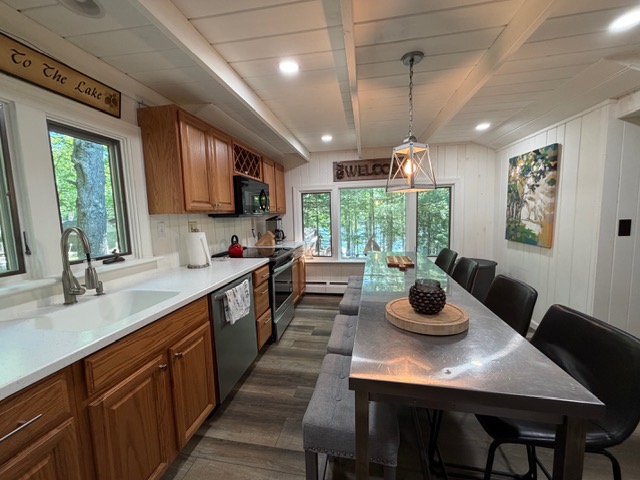
The Poconos attract a wide mix of buyers for good reason. Some families want more space, some want a stronger connection to the outdoors, and some are trying to stretch their housing dollars without giving up access to major employment centers. The opportunity is real, but so are the trade-offs.
Commute patterns matter more here than many buyers expect. On a map, a drive can look manageable. In practice, school drop-offs, weather, weekend traffic, and distance from major routes can change how convenient a location feels. A home that seems perfect online may add too much friction to daily life if you need frequent access to medical offices, grocery stores, after-school activities, or a predictable work commute.
Housing style also plays a bigger role in this market. Families often choose between established neighborhoods, private communities, lake-centered areas, and more rural settings. Each comes with a different balance of privacy, amenities, road maintenance, dues, and restrictions. A gated or amenity-rich community may appeal to one household and feel limiting to another. It depends on how you actually live.
Start with your non-negotiables, not your wish list. Bedrooms and updated kitchens are easy to search for. The harder questions are the ones that shape long-term satisfaction. How much drive time can your family realistically handle each week? Do you need a finished basement now, or simply room to expand later? Would you rather have a neighborhood feel, or more land and fewer nearby homes?
For many families, the search works best when priorities are divided into three groups: daily needs, financial limits, and lifestyle goals. Daily needs are things like school access, internet reliability, and proximity to services. Financial limits include not only price but also taxes, insurance, dues, utility costs, and maintenance. Lifestyle goals cover the reasons you are moving in the first place, whether that is more yard space, access to lakes and trails, or a quieter setting.
This is also where local guidance becomes valuable. A listing can tell you square footage and lot size. It will not always tell you how an area feels in off-season months, whether roads are straightforward in winter, or how one neighborhood compares to another for a growing family.
The best location is rarely the one with the most buzz. It is the one that supports your routine.
If your family wants a balance between year-round living and access to recreation, some Pocono communities offer that mix better than others. Areas near established schools, shopping, and main roads may feel more practical for primary residence buyers. Other locations offer more privacy or stronger vacation-home appeal, but they may require more driving and planning. Families relocating full-time usually benefit from weighing convenience first and scenery second.
Buyers looking around Lake Ariel, Lakeville, Tafton, Greentown, Honesdale, or the Lake Wallenpaupack area often discover that small differences between towns can have a big impact on lifestyle. One area may offer easier access to services and a more connected daily rhythm. Another may provide larger lots and a quieter setting but less flexibility if your schedule is packed. Neither is automatically better. The right fit depends on how your household functions now, not how you imagine it might function on vacation.
Families almost always focus on schools early, and that makes sense. But school fit should be part of a broader discussion about routine. Think about childcare transitions, sports, clubs, healthcare access, grocery runs, and how much time you want to spend in the car each week.
If your children are involved in activities, ask yourself whether your move will make that easier or harder. A lower home price farther out can lose some appeal if the savings are offset by constant driving. On the other hand, if your goal is more outdoor space and a less crowded pace, a slightly longer drive may feel well worth it.
Internet service is another detail families should verify early, especially if one or both adults work remotely or if students rely on stable home access for schoolwork. This is not the kind of market where you want to assume every property offers the same service quality.
A family move is not just about what you qualify for. It is about what stays comfortable after closing.
That means looking beyond the purchase price. In the Poconos, buyers should pay close attention to property taxes, homeowners association dues where applicable, utility costs, insurance, and seasonal maintenance. A larger property may solve a space problem while creating a higher upkeep burden. A home in a private community may offer amenities and neighborhood consistency, but those benefits should be measured against monthly costs and rules.
Older homes can also present a value question. They may offer charm, lot size, or a favorable location, but they can require updates sooner than expected. Newer or recently updated homes may reduce immediate maintenance, though often at a higher entry price. There is no one right answer here. Families with busy schedules often prefer fewer near-term projects, while others are comfortable building equity through improvements over time.
Family buyers can lose time by looking too broadly. A better approach is to narrow your search around real-life patterns. Focus first on where you need to be on weekdays, then compare homes within that practical radius.
It also helps to move quickly from online browsing to active decision-making. Set alerts that reflect your true budget and must-haves. Review new listings promptly. If possible, tour enough homes early in the process to understand how pricing lines up with condition, location, and community type. That reduces the chance of overreacting to one attractive listing or overlooking a better long-term fit.
This is where working with a responsive local professional can make a real difference. In a market with varied neighborhoods and housing types, context matters. Colette Trail helps buyers cut through the noise so they can focus on homes and areas that actually fit their goals.
Before you commit, slow down and picture daily life in the home. Can everyone realistically function in the layout? Is there enough storage for how your family lives now? Are the roads, driveway, and access points manageable year-round? If the property is in a community, do the rules support your plans, or create friction?
It is also worth considering how long the home can serve you. A move is expensive and disruptive, so many families prefer to buy with the next five to seven years in mind. That does not mean chasing a perfect forever home. It means avoiding a purchase that solves one problem while creating a new one within a year or two.
Relocation always brings some stress, even when it is the right move. The easiest transitions usually happen when families make decisions in the right order. First confirm location and budget, then compare homes. Not the other way around.
Once you are under contract, start planning around school registration, commute testing, service transfers, and move timing. If possible, visit the area during a normal weekday, not just on a sunny weekend. Watch the traffic, stop at the stores you would actually use, and notice how far essential errands feel. That ordinary perspective is often the one that confirms you are making a smart choice.
A family move to the Poconos can absolutely create more space, more flexibility, and a better day-to-day rhythm. The key is choosing with clarity instead of urgency. When the home, location, and routine all line up, the move starts to feel less like a gamble and more like a solid next step.

Colette Is a Highly Motivated , Energetic Full -time Real Estate Broker with a can-do attitude and her ability to embrace technology and to connect with clients and with other real estate professional....
If you are looking at Honesdale homes for sale, you are not just comparing square footage and price tags. You are choosing a pace of life, a town setting, and a property type that can feel very
You usually know this question is getting serious before you say it out loud. The house feels smaller than it used to, the upkeep feels heavier, or you catch yourself checking listings late at night
A buyer looking at the best Pocono lake communities is usually not just choosing a house. They are choosing a pace of life, an amenity package, a set of rules, and in many cases a very specific
Weekend traffic tells you a lot about the Poconos. Some buyers are heading up to tour a lake community for the first time. Others have already lost out on one house and do not want to repeat that
 The data relating to real estate for sale on this web site includes listings held by MLS-IDX Participants of the Internet Data Exchange program of the Multiple Listing Service of the Pocono Mountains Association of Realtors®. Listings marked with the Internet Data Exchange logo are not necessarily the listings of the owner of this web site. All listing data is the copyrighted property of the aforesaid Association and its MLS-IDX Participants with all rights reserved. The information contained
herein is believed to be accurate, but no warranty as such is expressed or implied.
Show More...
The data relating to real estate for sale on this web site includes listings held by MLS-IDX Participants of the Internet Data Exchange program of the Multiple Listing Service of the Pocono Mountains Association of Realtors®. Listings marked with the Internet Data Exchange logo are not necessarily the listings of the owner of this web site. All listing data is the copyrighted property of the aforesaid Association and its MLS-IDX Participants with all rights reserved. The information contained
herein is believed to be accurate, but no warranty as such is expressed or implied.
Show More...
 The information being provided by Greater Scranton Board of Realtors is for the consumer's personal, non-commercial use and may not be used for any purpose other than to identify prospective properties consumer may be interested in purchasing. Any information relating to real estate for sale referenced on this web site comes from the Internet Data Exchange (IDX) program of the Greater Scranton Board of Realtors. Pocono Mountain Lakes Realty is not a Multiple Listing Service (MLS), nor does it offer
MLS access. This website is a service of Pocono Mountain Lakes Realty, a broker participant of Greater Scranton Board of Realtors. This web site may reference real estate listing(s) held by a brokerage firm other than the broker and/or agent who owns this web site.
The information being provided by Greater Scranton Board of Realtors is for the consumer's personal, non-commercial use and may not be used for any purpose other than to identify prospective properties consumer may be interested in purchasing. Any information relating to real estate for sale referenced on this web site comes from the Internet Data Exchange (IDX) program of the Greater Scranton Board of Realtors. Pocono Mountain Lakes Realty is not a Multiple Listing Service (MLS), nor does it offer
MLS access. This website is a service of Pocono Mountain Lakes Realty, a broker participant of Greater Scranton Board of Realtors. This web site may reference real estate listing(s) held by a brokerage firm other than the broker and/or agent who owns this web site.
The accuracy of all information, regardless of source, including but not limited to open house information, square footages and lot sizes, is deemed reliable but not guaranteed and should be personally verified through personal inspection by and/or with the appropriate professionals. The data contained herein is copyrighted by Greater Scranton Board of Realtors and is protected by all applicable copyright laws. Any unauthorized dissemination of this information is in violation of copyright laws and is strictly prohibited.
Copyright 2026 Greater Scranton Board of Realtors. All rights reserved.
Data last updated: September 26, 2026 12:03 AM UTC Properties in listings may have been sold or may no longer be available.
Show More...
 Pike Wayne MLS® (PWMLS). All information deemed reliable but not guaranteed. All properties are subject to prior sale, change or withdrawal. Neither listing broker(s) or information provider(s) shall be responsible for any typographical errors, misinformation, misprints and shall be held totally harmless. Listing(s) information is provided for consumer's personal, non-commercial use and may not be used for any purpose other than to identify prospective properties consumers may be interested in purchasing. The data relating to real estate for sale on this website comes in part from the Internet Data Exchange program of the Multiple Listing Service. Real estate listings held by brokerage firms other than Pocono Mountain Lakes Realty may be marked with the Internet Data Exchange logo and detailed information about those properties will include the name of the listing broker(s) when required by the MLS. Copyright ©2026 All rights reserved.
Last Updated: September 25, 2026 11:57 PM UTC
Pike Wayne MLS® (PWMLS). All information deemed reliable but not guaranteed. All properties are subject to prior sale, change or withdrawal. Neither listing broker(s) or information provider(s) shall be responsible for any typographical errors, misinformation, misprints and shall be held totally harmless. Listing(s) information is provided for consumer's personal, non-commercial use and may not be used for any purpose other than to identify prospective properties consumers may be interested in purchasing. The data relating to real estate for sale on this website comes in part from the Internet Data Exchange program of the Multiple Listing Service. Real estate listings held by brokerage firms other than Pocono Mountain Lakes Realty may be marked with the Internet Data Exchange logo and detailed information about those properties will include the name of the listing broker(s) when required by the MLS. Copyright ©2026 All rights reserved.
Last Updated: September 25, 2026 11:57 PM UTC
 Luzerne County Association of REALTORS® (LZCAOR) All information deemed reliable but not guaranteed. All properties are subject to prior sale, change or withdrawal. Neither listing broker(s) or information provider(s) shall be responsible for any typographical errors, misinformation, misprints and shall be held totally harmless. Listing(s) information is provided for consumer's personal, non-commercial use and may not be used for any purpose other than to identify prospective properties consumers may be interested in purchasing. The data relating to real estate for sale on this website comes in part from the Internet Data Exchange program of the Multiple Listing Service. Real estate listings held by brokerage firms other than Pocono Mountain Lakes Realty may be marked with the Internet Data Exchange logo and detailed information about those properties will include the name of the listing broker(s) when required by the MLS. Copyright ©2026 All rights reserved.
Last Updated: September 26, 2026 12:11 AM UTC
Luzerne County Association of REALTORS® (LZCAOR) All information deemed reliable but not guaranteed. All properties are subject to prior sale, change or withdrawal. Neither listing broker(s) or information provider(s) shall be responsible for any typographical errors, misinformation, misprints and shall be held totally harmless. Listing(s) information is provided for consumer's personal, non-commercial use and may not be used for any purpose other than to identify prospective properties consumers may be interested in purchasing. The data relating to real estate for sale on this website comes in part from the Internet Data Exchange program of the Multiple Listing Service. Real estate listings held by brokerage firms other than Pocono Mountain Lakes Realty may be marked with the Internet Data Exchange logo and detailed information about those properties will include the name of the listing broker(s) when required by the MLS. Copyright ©2026 All rights reserved.
Last Updated: September 26, 2026 12:11 AM UTC
